
Spider control Perth.
The retic box gets checked every time.
Two kinds of northern-suburbs household: those who have found a redback in the retic box, and those who are about to. Webs removed, harbourages treated, redback hotspots opened and photographed.
- WA licence 13914
- Included in general pest
- Stand-alone $220–$300
- Retic-box check on every job
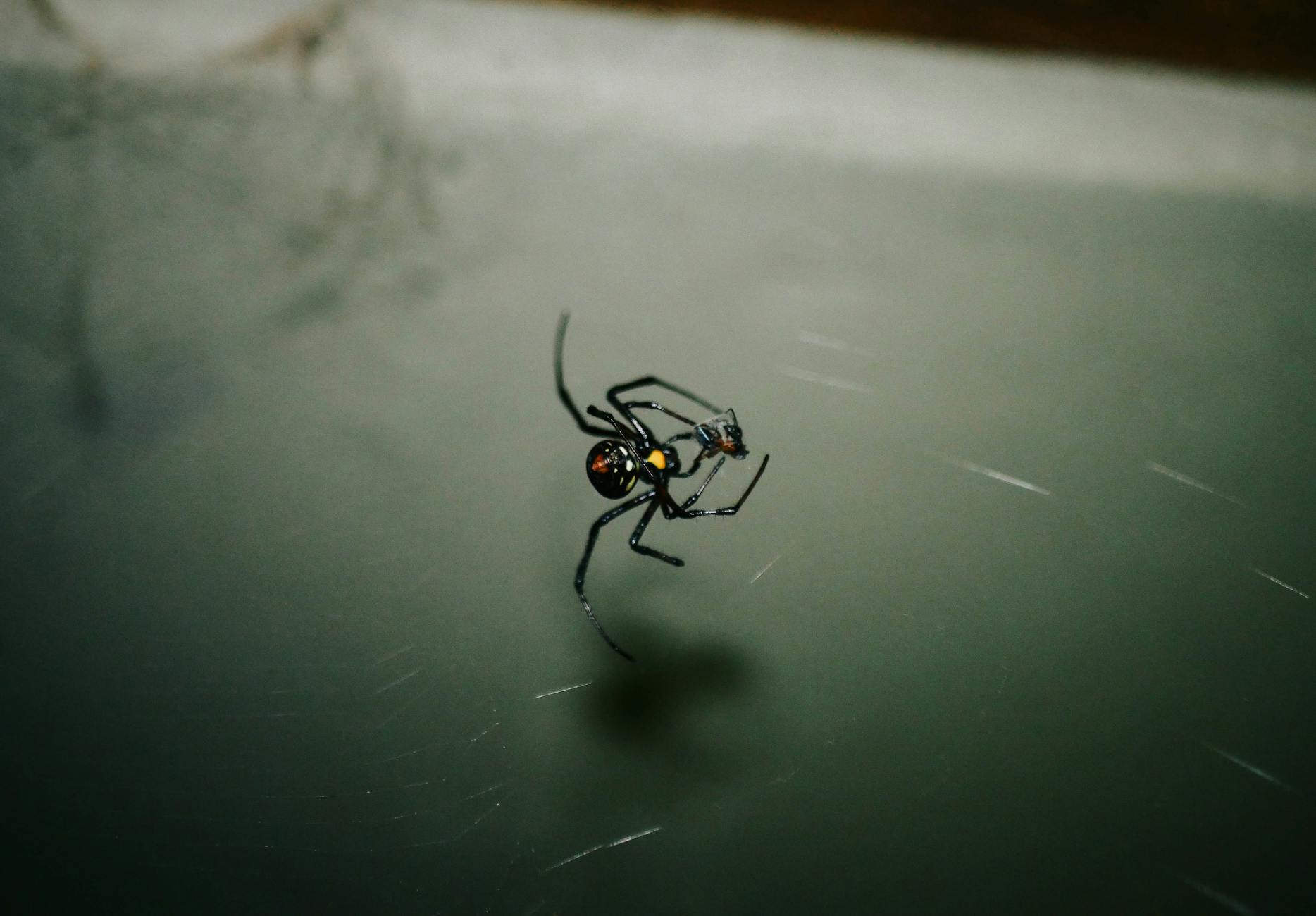
The spiders that actually matter in Perth.
Of the dozens of species in a northern-suburbs garden, only the redback (Latrodectus hasselti) is a genuine medical concern, with the white-tail a distant and overstated second. The rest are alarming, harmless or actively useful.
- Redback. Outdoors, in dry sheltered spots: under coping, inside retic valve boxes, under shed clutter, behind outdoor furniture, in roller-door rails. Peak summer. Rarely enters the house unaided.
- White-tail (Lampona spp.). Indoor wanderer on summer evenings, hunts other spiders, found in bedding and towels left on the floor. Mild bite.
- Black house spider (Badumna insignis). The messy funnel webs in window frames, eaves and fence corners. Mild bite, very common.
- Huntsman and wolf spiders. Large, fast, harmless. Huntsmen eat cockroaches. Wolf spiders live in lawns and bush edges.
- Daddy-long-legs. Eats other spiders. Leave them.
Signs: webs re-forming at eaves and window frames within days, a tangled web with a small hanging retreat under outdoor furniture or pool coping, and egg sacs, round and papery, in the retic box lid.
Webs down, harbourages treated, hotspots opened.
Web removal first
A treated surface only matters if the spider walks across it. Existing webs come down with a brush before anything is applied, so spiders re-establish on fresh treated surfaces, not on old silk.
Residual treatment of harbourage zones
Eaves and gutter lines, weep holes, window and door frames, fence lines, sub-floor vents, garage corners, under coping on patios and pool surrounds, and the outside of sheds. Spiders pick the residual up on their legs and groom it in.
Retic boxes and inside
Every visible retic valve box is opened, any redback photographed, and the lid and surrounds treated. Indoors, white-tail treatment is a targeted skirting and wardrobe-margin application with a non-staining product, only where it is warranted.
Typical ranges.
| Treatment | Typical range | Includes |
|---|---|---|
| Spiders within a general pest treatment | $250–$350 | All external zones above plus internal treatment; 6-month promise |
| Stand-alone spider treatment | $220–$300 | External harbourage treatment, web removal, retic-box check, report |
| Annual pre-summer spider treatment | $220–$300 | Same scope, timed October to December |
Typical range, GST inclusive. Every job is quoted itemised in writing before we start. No call-out fee, no deposit, seven-day payment terms. See the full pricing guide.
What you get.
Treatment report
Species found, every retic box and hotspot checked with photos, products and rates, re-entry period and a list of the clutter and coping that needs attention.
Treatment record
Kept three years under WA regulations, yours on request.
Re-treatment promise
Six months when spiders are treated as part of a general pest visit. Conditions on the promise page.
Before we arrive.
- Leave webs in place. They show us where the spiders are.
- Move outdoor furniture, pots and stored items a little away from walls and coping so we can treat behind them.
- Tell us where the retic boxes are, and about any redback sightings.
- Bring washing in and close windows on the treated sides for the visit.
- Cover fish ponds and outdoor tanks. Tell us about reptiles, birds and chickens.
- Kids and pets stay off treated surfaces until dry and the re-entry period we advise has passed.
Related: General pest treatment · Pricing guide · Spider blog posts
Spider control FAQ.
Are redbacks dangerous in Perth?
A redback bite is a medical matter: severe local pain, sweating, nausea and sometimes muscle pain, with children and older people most at risk. Deaths have been extremely rare since antivenom became available. If bitten, apply ice, do not apply a pressure bandage, and get to an emergency department. Reducing the chance of a bite is the point of treating the places they hide.
Where do redbacks hide around a Perth home?
Under coping on pavers, retaining walls and pool edges, inside reticulation valve boxes, under stored items in the shed, behind outdoor furniture, in roller-door rails and under the rims of unused pots. They like dry, sheltered, undisturbed spots and rarely come inside on their own. The retic box is the single most common bite scenario in the northern suburbs: someone reaches in blind.
What about white-tail spiders?
White-tails are wandering indoor hunters, most active on summer evenings. They do not build webs; they hunt other spiders. A bite can cause local pain and minor irritation. The long-running claim that they cause necrotic ulcers has not been supported by Australian clinical research. Unpleasant, not destructive.
Are huntsman spiders dangerous?
No. They are large and alarming but not medically significant, and they eat cockroaches. We do not target huntsmen specifically. A general spider treatment affects them incidentally, but if a huntsman in the shed is your only complaint, we will tell you to save your money.
Will treatment stop spiders for good?
No, and be wary of anyone who says it will. Spiders walk in from neighbouring properties and balloon in on the wind. A residual treatment affects spiders that cross treated surfaces while it remains active. Spider treatment inside a general pest visit carries a six-month re-treatment promise on the treated areas. Annual pre-summer treatment suits most homes.
When is the best time to treat spiders in Perth?
October to December is peak activity: the most webs, the most wandering males and the most new redback nests. A treatment in spring sets the property up for summer. Properties backing onto bush or with a lot of retic boxes and hard landscaping benefit most.
What about kids and pets during a spider treatment?
Residual products are applied to external surfaces, eaves, weep holes, fence lines and sub-floor vents at label rate. Kids and pets stay off treated surfaces until they are dry and the re-entry period we advise has passed, usually around two hours. Pets should not lick treated surfaces in that window.
Get the redback hotspots dealt with.
Tell us the suburb, what you have seen and where. We will send an itemised price and a time, and we will check every retic box.
Prefer to talk? Call 0447 747 769
Or text photos of the pest or droppings to 0447 747 769 and we'll identify it.